
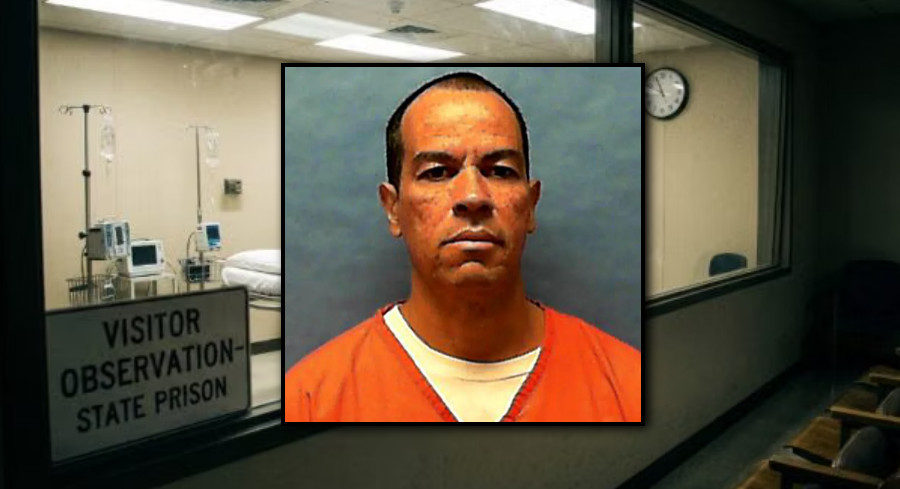
With just seven days left before Ricardo Gonzalez is scheduled to die by lethal injection, the Florida Supreme Court on Tuesday cleared the remaining state-level roadblocks to his execution for the 1992 murder of a North Miami police officer.
In a unanimous ruling, the justices refused to halt Gonzalez’s Dec. 1 execution date, upholding a Miami-Dade County judge’s decision to toss out his latest round of postconviction appeals while also rejecting a separate habeas corpus petition. The court ordered its mandate to take effect immediately and barred any requests for a rehearing.
The decision leaves Gonzalez out of options in state court for a crime that unfolded more than 34 years ago outside Kislak National Bank in North Miami. On Jan. 3, 1992, four armed men ambushed the bank, grabbing a cash box from a drive-in teller before speeding away in two stolen grey Chevrolet Caprice sedans. During the chaotic holdup, uniformed North Miami Police Officer Steven Bauer, who was working a security detail at the bank, was shot and killed. Police found the getaway cars dumped two blocks west of the bank shortly after the shooting.
When investigators stopped Gonzalez two weeks after the robbery, he confessed to taking part in the heist and firing once at Bauer, though he insisted he had aimed low and thought he only hit the officer in the leg. Court records note that Gonzalez admitted holding the weapon that fired the fatal round, and a jury convicted him on all counts in 1994.
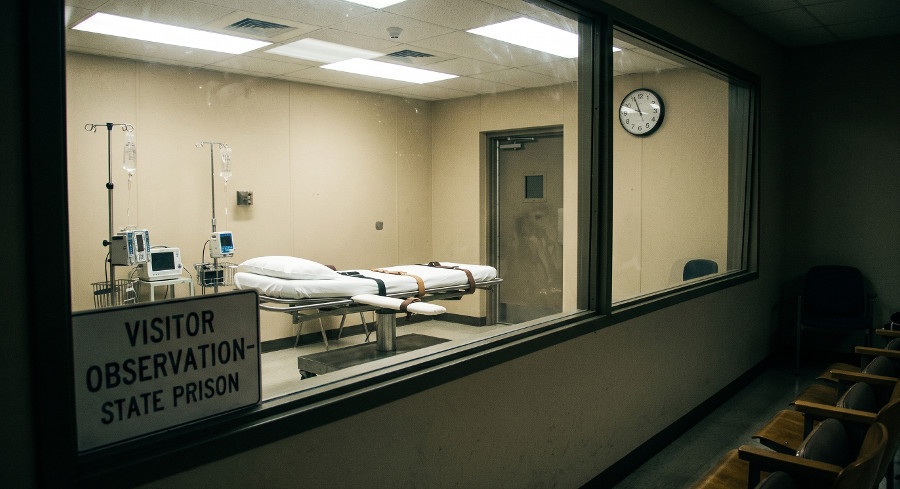
Gonzalez’s path to the death chamber has spanned more than three decades of courtroom battles. Although the state Supreme Court upheld his conviction in 1997, the justices threw out his initial death sentence because prosecutors had improperly introduced confessions from two codefendants during the trial. At a second sentencing hearing, a jury voted 8-4 to recommend execution, and the judge reimposed the death penalty, which became final in 2001.
After Gov. Ron DeSantis signed Gonzalez’s death warrant on Oct. 30, defense lawyers tried multiple avenues to stop the execution. On Nov. 15, his attorneys sent a letter to the governor warning that Gonzalez “may lack the mental capacity to understand the nature and effect of the death penalty and the reason it is to be imposed upon him.”
DeSantis paused the execution two days later and appointed a panel of three psychiatrists to evaluate Gonzalez. By Nov. 19, the doctors reported back “with a reasonable degree of medical certainty that” Gonzalez “understands the nature and effect of the death penalty and why it is to be imposed on him.” DeSantis lifted the temporary stay that same day.
Before the state Supreme Court, Gonzalez’s legal team raised more than a dozen arguments, contending that executing him would be unconstitutional because he was 21 at the time of the robbery and suffers from brain damage and intellectual disabilities. His lawyers also argued that Florida’s lethal injection drugs could cause severe suffering due to his history of drug allergies, challenged the state’s tight post-warrant records rules, and attacked the nonunanimous 8-4 jury recommendation.
The justices dismantled each claim, finding that nearly all of them had been filed decades too late or had already been settled in past appeals.
The court pointed out that Gonzalez’s brain damage, learning disabilities, and age were all known and weighed by the judge during his second sentencing hearing years ago. Similarly, the justices dismissed his arguments over lethal injection side effects as speculative, quoting the lower court’s observation that “a claim does not become timely simply because it is repackaged after a warrant is signed.”
The court also backed the circuit judge’s refusal to force four state and local agencies to hand over additional public records, noting that prison officials had already provided five years of Gonzalez’s medical and classification files on Nov. 3 and that his lawyers failed to show how older records would support a valid legal claim.
Finally, the justices refused to overturn their past rulings permitting nonunanimous death recommendations and rejected the idea that spending over 30 years on death row makes an execution unconstitutional.
Chief Justice John D. Couriel and Justices Carlos G. Muñiz, Jamie R. Grosshans, Renatha Francis, Meredith Sasso Barrios, and Adam Tanenbaum joined the opinion, while Justice Jorge Labarga concurred in the result.
Add The Tampa Free Press As A Preferred Source On Google
Please make a small donation to the Tampa Free Press to help sustain independent journalism. Your contribution enables us to continue delivering high-quality, local, and national news coverage.
