
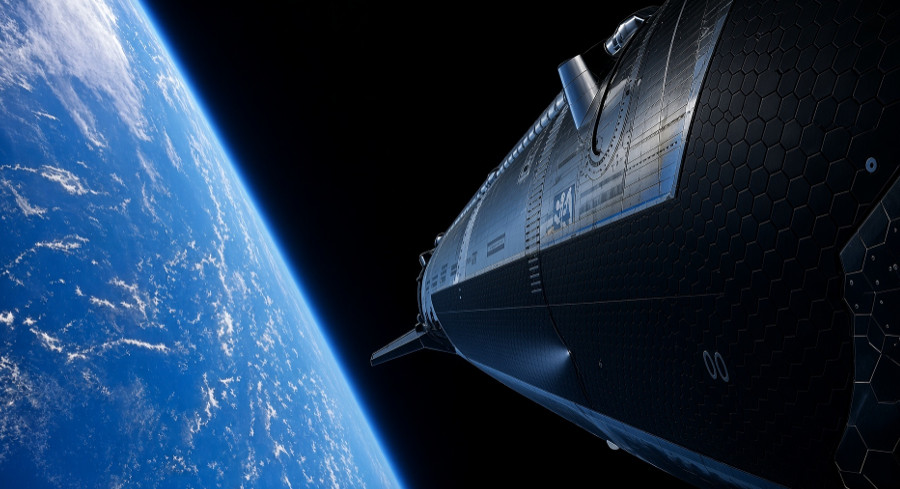
The Federal Communications Commission announced Wednesday that SpaceX has received approval to launch up to one million orbital compute modules for data centers in space under a project named Starmind.
The authorization is intended to expand computing capacity for artificial intelligence. According to FCC Chairman Brendan Carr, the decision marks the first time the agency has approved deploying one million orbital compute modules.
“America is leading the world into the era of superintelligence. Under President Trump’s leadership, the United States is moving decisively to ensure that this breakthrough technology creates opportunity, drives investment, and delivers lasting benefits for the American people. The FCC supercharges that effort today by granting, for the first time ever, authorization to deploy 1 million orbital compute modules for data centers in space. This action opens a bold new frontier for the computing infrastructure needed to power America’s leadership and growth,” Carr said in a statement.
SpaceX first sought satellite authorization for data centers in January, according to Politico. Under the terms tied to the approval, SpaceX must place its first data center into orbit by 2033.
The move comes amid growing pushback against land-based facilities across the country. Many communities have raised concerns over the heavy electricity and water demands required by large data centers, along with broader frustration toward major technology companies. In the 2026 midterm elections, voters passed restrictions or stricter regulations on data centers in roughly 40 localities.
Moving computing infrastructure into orbit could bypass some local resource disputes, though it introduces steep technical and operational hurdles. Ground-based data centers need continuous cooling to prevent overheating and use an average of 300,000 gallons of water each day. They also require large amounts of power, with figures cited at 482 gigawatt-hours per day. SpaceX has stated that Starmind could rely on solar energy to “harness the full power of the sun,” while space offers colder ambient temperatures than Earth.
Even with solar power and low temperatures, orbital facilities face major engineering challenges. Politico reported that the system would have to contend with orbital debris and protect hardware from space radiation, alongside economic and logistical obstacles before the network can scale.
Add The Tampa Free Press As A Preferred Source On Google
Please make a small donation to the Tampa Free Press to help sustain independent journalism. Your contribution enables us to continue delivering high-quality, local, and national news coverage.
