
In a narrow 9-8 ruling that tests the constitutional boundaries of how Congress does business, a federal appeals court decided Friday that the U.S. House of Representatives broke the rules of the Constitution when it used pandemic-era proxy voting to pass a $1.7 trillion spending package in 2022.
The decision from the full U.S. Court of Appeals for the Fifth Circuit in State of Texas v. Blanche blocks the federal government from enforcing the Pregnant Workers Fairness Act against the state of Texas, even though it leaves the rest of the massive funding bill untouched.
At the heart of the legal fight is a simple question: What does it actually mean to be “present” in Congress?
On Dec. 23, 2022, the House passed the Consolidated Appropriations Act of 2023 by a vote of 225 to 201, with one member voting present and four not voting. While 205 lawmakers showed up in person, the Congressional Record shows that 226—more than half the chamber—had another member cast their ballot and record their presence by proxy under a rule adopted during the COVID-19 pandemic.
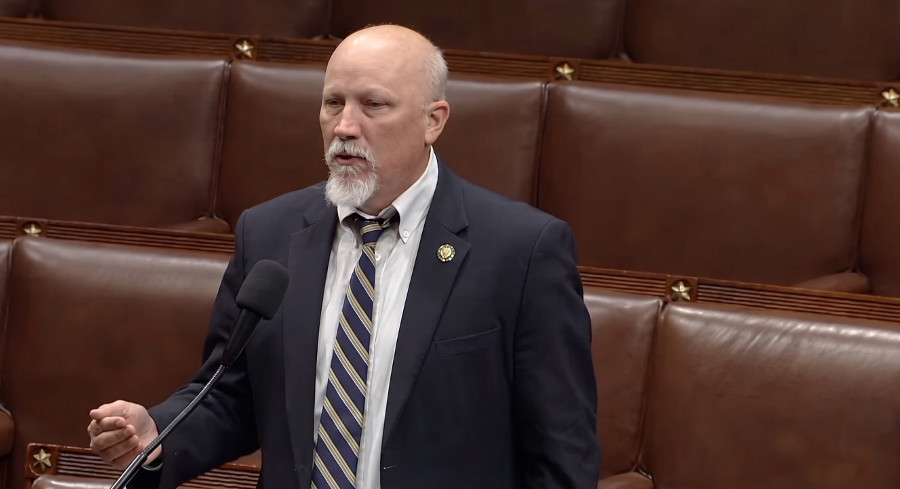
Texas Rep. Chip Roy objected on the House floor at the time, noting that fewer than a physical majority of lawmakers were actually in the room. Speaker Pro Tempore Rep. G.K. Butterfield brushed the objection aside, ruling that under House procedures, members voting by proxy counted toward a quorum. The Senate later passed the bill, and the president signed it into law.
Texas sued U.S. Attorney General Todd Blanche, the Department of Justice, and the Equal Employment Opportunity Commission, arguing that the House never had a valid constitutional quorum to pass the bill. Rather than trying to unravel the entire $1.7 trillion package, Texas asked a federal judge to block just one piece of it: the Pregnant Workers Fairness Act, which requires employers to provide reasonable accommodations for pregnant workers. A district court judge in northern Texas agreed and issued a permanent injunction.

Government lawyers argued that courts had no business second-guessing Congress because of the “enrolled-bill rule,” a centuries-old legal doctrine holding that once congressional leaders and the president sign a bill, its passage cannot be challenged in court.
The Fifth Circuit majority rejected that defense, explaining that the enrolled-bill rule only stops courts from investigating disputed facts in legislative records—and here, both sides agreed on exactly what happened.
“Everyone agrees on the underlying facts of the Act’s passage—relevantly, that the House established a purported quorum only by including proxies in the quorum count,” Circuit Judge Cory T. Wilson wrote for the majority.
Wilson pointed out that the Constitution’s Quorum Clause requires a majority of each chamber to do business and gives a smaller number of lawmakers the power to “compel the Attendance of absent Members.” Reading “attendance” to mean anything other than physical presence, he wrote, would turn that power into a hollow authority to tell distracted lawmakers to pay attention.
The majority also warned that the government’s position had no logical stopping point. During oral arguments, federal attorneys conceded that under their reading of the Constitution, all 434 House members could theoretically hand their proxies to the Speaker, allowing a single lawmaker standing alone on the House floor to pass federal laws.
“The Clause’s text, context, original understanding, and unbroken historical application all indicate that Members of Congress must be present for quorum purposes—as the Supreme Court expressly held over 125 years ago, and as Congress has done ever since the Founding,” Wilson wrote. “‘Proxy presence’ does not count.”
Eight judges pushed back sharply in dissent. Circuit Judge James E. Graves Jr. accused the majority of inventing a “physical presence” rule that isn’t written in the Constitution, noting that the Founding charter explicitly gives each chamber the power to set its own rules of proceedings.
Graves pointed out that since the First Congress met in 1789, both the House and Senate have routinely passed laws, confirmed 69 Supreme Court justices, and promoted hundreds of military officers through unanimous consent and voice votes when only a handful of lawmakers were physically in the chamber.
He also criticized the state of Texas for taking federal money from the 2022 spending package while asking courts to strike down a single worker-protection provision inside it, and faulted the majority for declaring the entire law unconstitutionally passed while only blocking one section.
“In this suit, the State of Texas sought a preliminary injunction preventing enforcement of one portion of the Consolidated Appropriations Act of 2023, the Pregnant Workers Fairness Act (PWFA), attempting to veto Congress’s protections for pregnant workers and new parents while retaining millions in federal funding,” Graves wrote. “Simply put, the majority’s decision is illogical, inexplicable, and invalid.”
Circuit Judge Catharina Haynes wrote a brief separate dissent, saying she did not believe courts should “throw out the Federal House of Representatives in this arena.”
For now, the majority emphasized that its ruling reaches no further than the district court’s order, meaning the rest of the 2022 spending law remains intact while the Pregnant Workers Fairness Act stays on ice for Texas state employers.
Add The Tampa Free Press As A Preferred Source On Google
Please make a small donation to the Tampa Free Press to help sustain independent journalism. Your contribution enables us to continue delivering high-quality, local, and national news coverage.
