
At roughly 9 a.m. on Wednesday, Nov. 25, federal crews in Middletown, Iowa, will intentionally detonate a cache of degraded crystallized lead azide inside the Iowa Army Ammunition Plant.
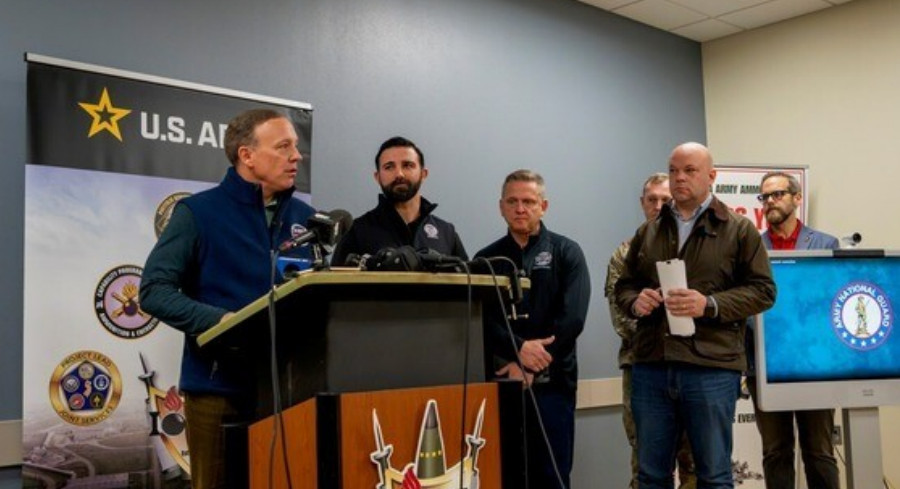
To pull off the operation without risking nearby towns, a massive multi-agency team has descended on the region. During a Tuesday briefing in Washington, leaders from the U.S. Army, the Environmental Protection Agency, FEMA, the ATF, the Department of Health and Human Services, and the Department of Agriculture laid out their plan to neutralize the unstable chemical in place.
“As a supporting agency, EPA has mobilized a significant on-the-ground response, working with Army, FEMA, HHS, and our federal partners to ensure the controlled detonation is conducted in the safest manner possible,” said Tom Croci, the EPA’s associate administrator for national security and operations coordination. “EPA’s ground response is continuing to expand, with additional teams of EPA and contract personnel being deployed, along with our emergency response resources that will include three mobile labs and one air toxics lab that are using gold standard science.”
Waiting for the material to degrade further carries the risk of an accidental, uncontrolled explosion. By timing the blast for optimal weather conditions and using specialized containment methods, the Army aims to keep dangerous lead dust from drifting onto local homes and windows.
Keeping lead out of the air and soil is the top priority for health officials, especially since exposure poses severe risks to pregnant women, infants, and young children.
Ahead of Wednesday’s countdown, more than 100 EPA staffers and contractors have fanned out across Middletown and the surrounding areas, gathering over 1,001 baseline samples of local air, land, and water.
“EPA has been on the ground conducting independent air, water, and soil sampling and will continue until the mission is complete,” Croci said. “We are putting the full force of the agency behind this effort to ensure we are doing everything possible to protect human health and the environment.”
Those mobile labs won’t pack up once the dust settles. Crews will keep sampling throughout the blast and afterward, sharing the findings with the Centers for Disease Control and Prevention to figure out if any cleanup is required. Officials say those test results will be released publicly as soon as possible.
In the meantime, federal teams are working directly with state and local leaders across Iowa, Illinois, and Missouri to keep neighbors updated and minimize disruptions while the operation unfolds.
Add The Tampa Free Press As A Preferred Source On Google
Please make a small donation to the Tampa Free Press to help sustain independent journalism. Your contribution enables us to continue delivering high-quality, local, and national news coverage.
