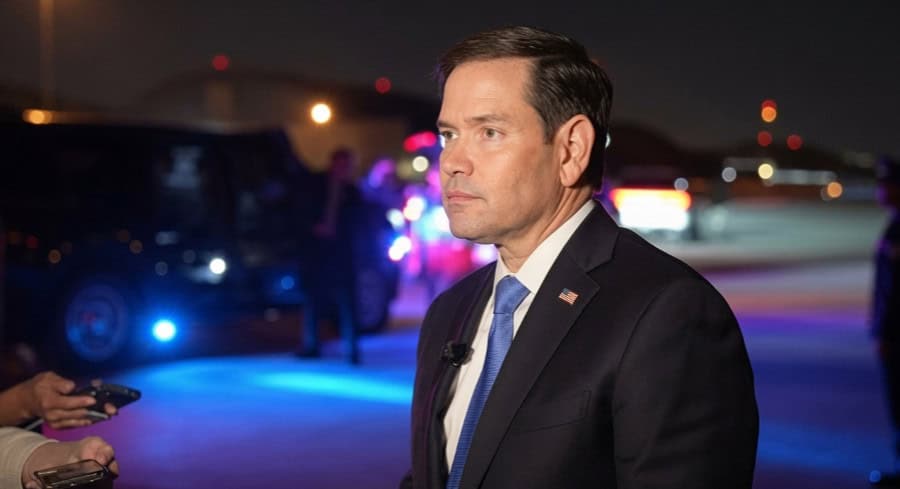
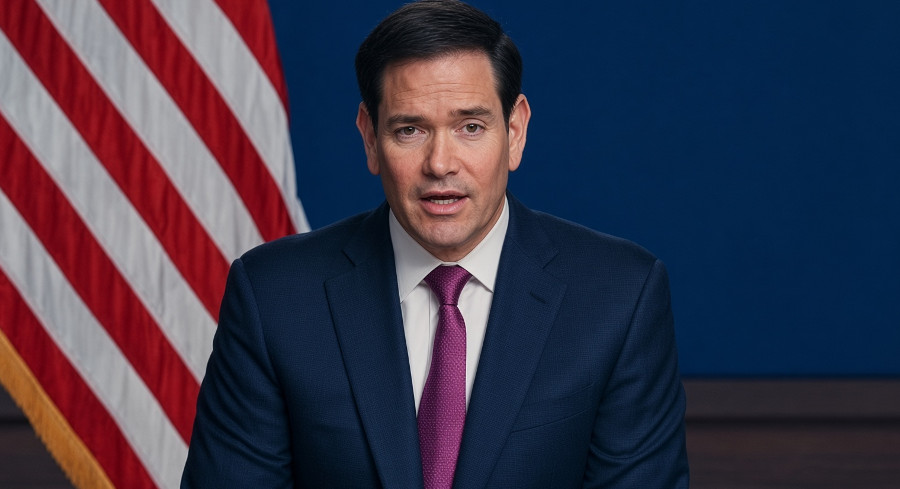
Secretary of State Marco Rubio holds a commanding early lead over outgoing Gov. Ron DeSantis and Vice President J.D. Vance among Florida’s Hispanic Republicans in a potential 2028 presidential primary matchup, according to a survey conducted for HispanicsVote.org.
In the poll, taken from October 14 to October 18 ahead of the midterm elections, 57 percent of Florida’s Hispanic Republican voters backed Rubio. DeSantis followed at 25 percent, and Vance drew 10 percent. Fewer than 4 percent said they were undecided, while former Virginia Gov. Glenn Youngkin registered no support. Pollsters surveyed 855 Hispanic registered voters across Florida, carrying an overall margin of error of plus or minus 4 percentage points, and asked the 2028 GOP primary question to 351 registered Republicans, a subgroup with a margin of error of roughly 5.2 points.
While all three top contenders earned nearly identical overall favorability ratings among Florida Hispanic Republicans—each landing between 88 and 90 percent—voter intensity told a sharper story. Seventy-two percent of those respondents rated Rubio as very favorable and 73 percent said the same of DeSantis, compared with 42 percent for Vance. Rubio, a former Florida senator and the son of Cuban immigrants, also generated strong enthusiasm for a hypothetical general election race: 61 percent of Hispanic Republicans said they would be much more motivated to cast a ballot in 2028 if he were at the top of the ticket. Across all Hispanic voters polled in the state, Rubio topped California Gov. Gavin Newsom 39 percent to 32 percent.
Even with Rubio’s wide margin, HispanicsVote.org founder and Republican National Hispanic Assembly of Florida chair Barbara Casanova warned against treating the numbers as a done deal. “It’s very, very early,” Casanova said, pointing out that the 2028 race remains wide open and that DeSantis still commands deep support in his home state. She noted that future events and legislation could shift the landscape, though she added that many voters would welcome the opportunity to elect the nation’s first Hispanic American president. Casanova credited Rubio’s work at the State Department on Cuba, Iran, Venezuela, and recent elections in Colombia, saying continued foreign policy results could broaden his appeal across party lines.
Outside Florida, the national picture looks far tighter. A Siena College survey of Republican primary voters conducted from October 12 to October 19 found Vance leading nationally with 33 percent to Rubio’s 23 percent. Rubio has previously said he would step aside if Vance runs, and he recently pushed back on reports that he is preparing to leave the Trump administration or mount a 2028 campaign.
Staying with the administration through the end of Trump’s term has “always been my plan,” Rubio said in an interview, though he declined to say whether he is weighing a White House bid. DeSantis, meanwhile, leaves office on January 5, 2027, when Gov.-elect Byron Donalds is sworn in. According to The Washington Post, three people briefed on DeSantis’ plans said he is preparing to run for the 2028 GOP nomination after Florida remained a conservative stronghold during a broader Democratic midterm wave, though DeSantis publicly denied the report, calling it fabricated and stating he had not reached out to anyone about running in 2028.
The November 3 general election underscored the state’s shifting dynamics. Republicans held their statewide grip, with Sen. Ashley Moody winning 51 percent to 48 percent and Donalds edging out Democrat David Jolly 50 percent to 49 percent. Yet a post-election UnidosUS survey showed Latino voters swinging toward Democrats, favoring Democrat Angie Nixon over Moody 53 percent to 43 percent and backing Jolly over Donalds 53 percent to 41 percent.
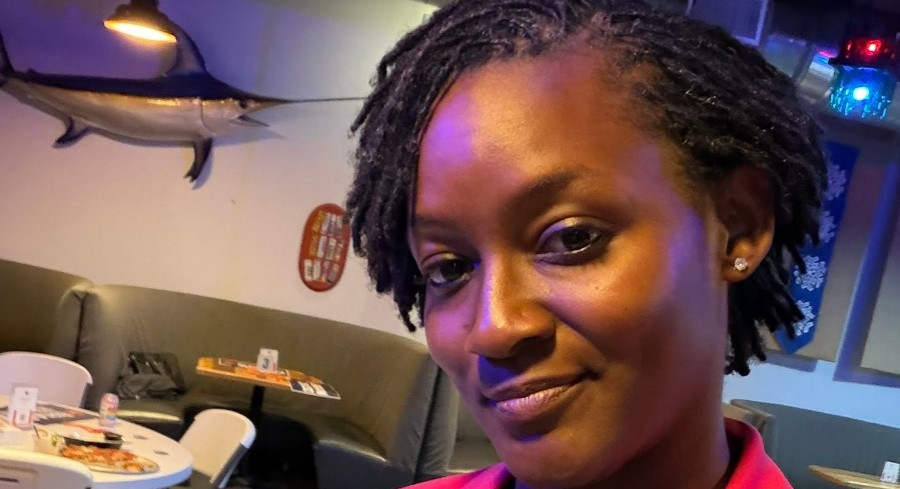
UnidosUS Florida state director Jared Nordlund said Latino voters are increasingly focused on economic and political results. In Miami-Dade County, Hispanic voters still leaned Republican by narrower margins, but the county overall shifted 18 points toward Democrats compared with the 2024 presidential race. Florida International University political scientist Eduardo Gamarra told NPR prior to the election that while enthusiasm favored Democrats, Republicans maintained a stronger political organization.
Inside the HispanicsVote.org survey, Cuban Americans made up roughly 46 percent of Republican respondents. Fifty-three percent of Hispanic Republicans supported active efforts to encourage political change and opposition movements inside Cuba, 11 percent favored tougher sanctions, and 36 percent were unsure.
On immigration, a striking consensus emerged across party lines: 97 percent of all respondents—and 93 percent of Hispanic Republicans—backed a pathway to citizenship for long-term undocumented residents who pay taxes and have no serious criminal record. Deporting only immigrants convicted of felonies drew 91 percent support overall and 86 percent among Republicans, while 58 percent of Republicans opposed deporting long-term residents without criminal records. Sixty-nine percent of respondents opposed using appearance, language, or job type to decide whom to stop for immigration enforcement.
At the same time, border security remained popular, drawing 53 percent support statewide and 68 percent among Republicans, even though 45 percent said recent raids and deportations had hurt their family or community. Casanova said voters want border enforcement and the removal of criminals alongside a legal path for long-term residents, adding that respondents objected to how the Trump administration has handled enforcement and failed to clearly explain who is being deported and why.
She pointed to discomfort over ICE operations in local stores and public spaces where legal immigrants are present, and said she plans to meet with Republican Rep. María Elvira Salazar’s office and other leaders to push for new immigration policies after Salazar’s own proposal polled poorly. Rubio has his own history on the issue, having joined the bipartisan “Gang of Eight” senators in 2013 to draft an immigration overhaul with a pathway to citizenship that cleared the Senate before stalling in the House.
Economic worries also weighed heavily on voters in the survey. Sixty-two percent of all respondents said their families were worse off financially than they had been a year earlier, compared with just 1.8 percent who said they were better off, and 54 percent said Florida was headed in the wrong direction. Republican respondents held a brighter view, with 30 percent saying their families were worse off and 65 percent saying the state was moving in the right direction. Overall, 52 percent said the American dream was not really or not at all attainable—a result Casanova called the poll’s most troubling and significant finding.
On the Democratic side of the HispanicsVote.org survey, New York Rep. Alexandria Ocasio-Cortez led the 2028 primary field among 306 Hispanic Democrats with 44 percent support. Former Vice President Kamala Harris followed at 22 percent, Newsom received 14 percent, and former Transportation Secretary Pete Buttigieg drew 9 percent. Pennsylvania Gov. Josh Shapiro and Kentucky Gov. Andy Beshear registered no support, while 11 percent were undecided. Casanova described Ocasio-Cortez’s showing as unusual, while Arizona Sen. Ruben Gallego had warned at a June Latino Vote Summit in Washington that a Rubio nomination could put Democrats in serious trouble.
Add The Tampa Free Press As A Preferred Source On Google
Please make a small donation to the Tampa Free Press to help sustain independent journalism. Your contribution enables us to continue delivering high-quality, local, and national news coverage.
