A fight over what doctors must learn in California triggered a First Amendment warning from Supreme Court Justice Clarence Thomas.
On Monday, November 16, the high court declined to hear Khatibi v. Yip, a legal challenge to California’s continuing medical education rules. Thomas dissented from that decision, joined by fellow conservative Justice Samuel Alito. In his opinion, Thomas argued that a lower federal appeals court blurred the boundary between official government messaging and private expression, cautioning that strict state oversight does not cancel out constitutional free speech rights.
At the center of the dispute is a 2019 California law requiring any continuing medical education course involving patient care to include instruction on implicit bias and its impact on health outcomes. Although state officials set the broad standards and audit classes to ensure compliance, private organizations actually design, accredit, and teach the courses without getting state sign-off on every lesson ahead of time.
Physician Azadeh Khatibi and her fellow challengers argued that forcing instructors to cover implicit bias amounts to unconstitutional compelled speech. Thomas backed their core concern, writing, “First Amendment protections do not give way simply because a State heavily regulates speech.”
Much of Thomas’s pushback targeted how the U.S. Court of Appeals for the Ninth Circuit applied the Supreme Court’s 2022 ruling in Shurtleff v. Boston. That earlier case involved Boston officials refusing a Christian group’s request to fly a religious flag outside City Hall. The justices ruled against the city, finding its flag-raising program was not government speech, and established a three-part test to decide when speech belongs to the state: the history of the expression, who the public believes is speaking, and how much the government shaped the message.
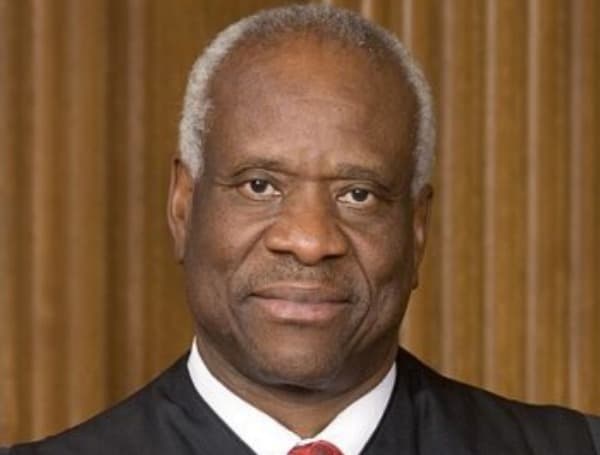
In the California doctor case, Thomas argued the Ninth Circuit leaned far too heavily on the state’s regulatory power over medical licensing, mistakenly treating private classroom instruction as government speech. “More fundamentally, however, Shurtleff is leading courts astray,” he wrote.
If that reasoning stands, Thomas warned, states could wipe out First Amendment protections across almost any industry simply by regulating it heavily enough. “In its blinkered application of the Shurtleff factors, the Ninth Circuit lost sight of the core government-speech inquiry: whether the government is ‘speak[ing] for itself or. . . regulat[ing] private expression,’” Thomas wrote. He noted that the government-speech doctrine covers only a narrow slice of constitutional law, adding, “The First Amendment protects the people’s right of free speech against government interference; it does not prevent the government from speaking for itself.”
It wasn’t the first time Thomas and Alito sounded this exact alarm. The two justices raised a similar concern in a 2022 opinion, predicting that the Shurtleff test would mislead lower courts into treating heavily regulated private speech as the government’s own voice.
Because the Supreme Court passed on the appeal, the Ninth Circuit’s ruling stays on the books and California’s training rule remains in effect without a new nationwide standard. Even so, the attorneys behind the lawsuit made clear they view this setback as temporary.
“There is little in the lower courts’ logic to limit that absurd result to medical education,” said Caleb Trotter, an attorney with the Pacific Legal Foundation, which represented the challengers. “While this is the end of the road for this important compelled-speech case, we will continue fighting against attempts to require endorsement of government orthodoxy to practice one’s profession.”
While this specific lawsuit has reached its end, Thomas’s dissent signals an appetite among him, Alito, and potentially Justice Neil Gorsuch to revisit the 2022 precedent when the next opportunity arises. “This Court should reconsider whether the Shurtleff test is the proper mode of analysis for identifying government speech,” Thomas wrote.
Add The Tampa Free Press As A Preferred Source On Google
Please make a small donation to the Tampa Free Press to help sustain independent journalism. Your contribution enables us to continue delivering high-quality, local, and national news coverage.
