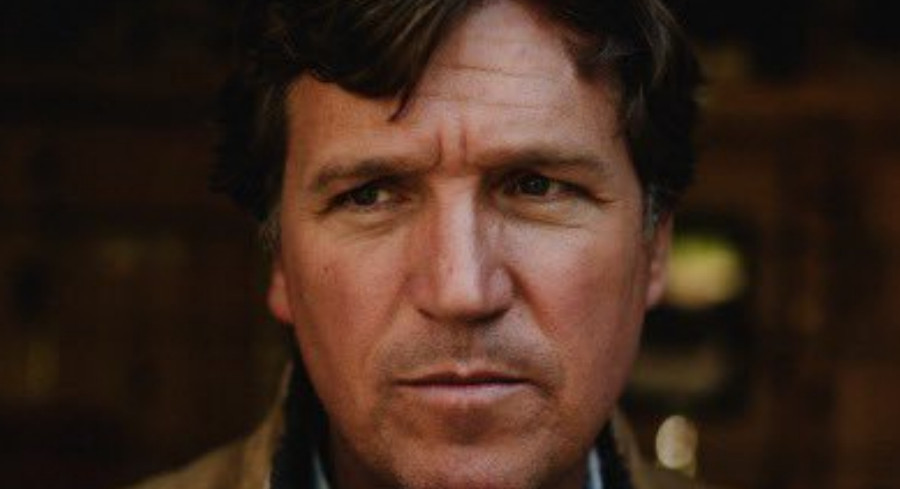
Tucker Carlson said he regrets stepping out of his usual journalistic distance to campaign for President Donald Trump, telling host Brandon Straka during an episode of The Brandon Straka Show that his close involvement clouded his judgment during the start of Trump’s second term.
During the conversation, Carlson explained that he normally avoids voting or forming personal ties with politicians because he covers them for a living. With Trump, however, he spoke at the Republican National Convention and joined him on the campaign trail.
“Well, you’re, you’re wise and wiser than I was,” Carlson told Straka after the host recalled feeling uneasy from the first day of the administration. “And this is why I never have gotten close to a politician. I never, I don’t even vote for that. I mean, I’ve never have, I don’t think, um, in general, I don’t vote because I cover these people. I know them. I don’t want to feel in the back of my mind. Like I, we have a relationship, you know, it’s like, it’s business, but Trump, I just lost all perspective and campaigned for him and spoke at the convention on Thursday night. And then, um, and then went on the road with him, you know, giving speeches and stuff on his behalf with him.”
Carlson said that closeness prevented him from seeing warning signs early on. “So I was way too, I was way too close to it. I mean, I just broke all my own rules and I’m embarrassed of that and I’ve apologized,” he said. “Let me do it. So again, but because of that, I think I didn’t allow myself to see certain things or I just discounted them and they started deporting people for criticizing Israel.”
A major point of friction for Carlson involved immigration enforcement and speech policies surrounding Israel and antisemitism. Referring to green card holders facing deportation over anti-Israel speech, Carlson questioned the administration’s priorities.
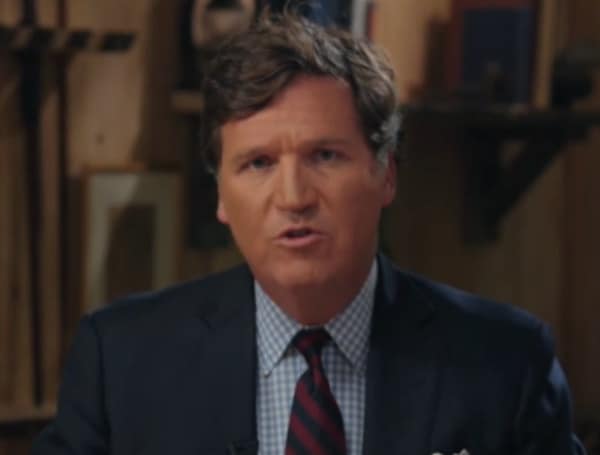
“I was like, you promised deportations, but these people have green cards for one thing. What are you even doing? And you promised to fight identity politics and now you’re starting a new version of it around antisemitism,” he said. When Straka called it “the worst version,” Carlson replied, “The worst version ever. The most divisive version and the most insane version. Harvard may have an antisemitism problem. It’s not reflected in admissions numbers. Like what are you even talking about? Like the whole thing is nuts.”
Straka opened the exchange by saying he doubted the administration’s populist direction as soon as he saw tech executives like Mark Zuckerberg and Jeff Bezos alongside Trump at the inauguration. He also recounted a December phone call with his longtime friend and former personal attorney, Harmeet K. Dhillon, after she was tapped for a Justice Department position.
According to Straka, he asked Dhillon about Jan. 6 defendants who were considering suing the government, and she responded that they had pleaded guilty, that the Justice Department would not simply cut checks to them, and that she was not going to investigate the department she was joining.
Carlson said he had a similar reaction to Dhillon, whom he noted he has known for 35 years since taking her desk in Washington in 1991, and who had also served as a personal attorney for him and his employees. Arguing that civil rights protections must apply universally rather than by group category, Carlson said he was surprised by her posture in office.
“I could not believe that someone who had a legal practice dedicated to upholding civil rights law, which means universally applicable law to all of us. There are no special groups. We all have inalienable rights guaranteed by the constitution, given by God, protected by the government. And all of a sudden she becomes this like identity politics bot who’s lecturing people about antisemitism,” Carlson said.
He added that treating discrimination against one group differently from another undermines the entire legal standard. “And if you start saying that it’s discriminating against this group is worse than discriminating against that group, then no discrimination is wrong,” Carlson said. “So if it’s not, again, if it’s not a universal standard deriving from a universal principle, it has no meaning. That’s why identity politics is itself, not just stupid, but evil. And it will lead to the destruction of this country and physical violence.”
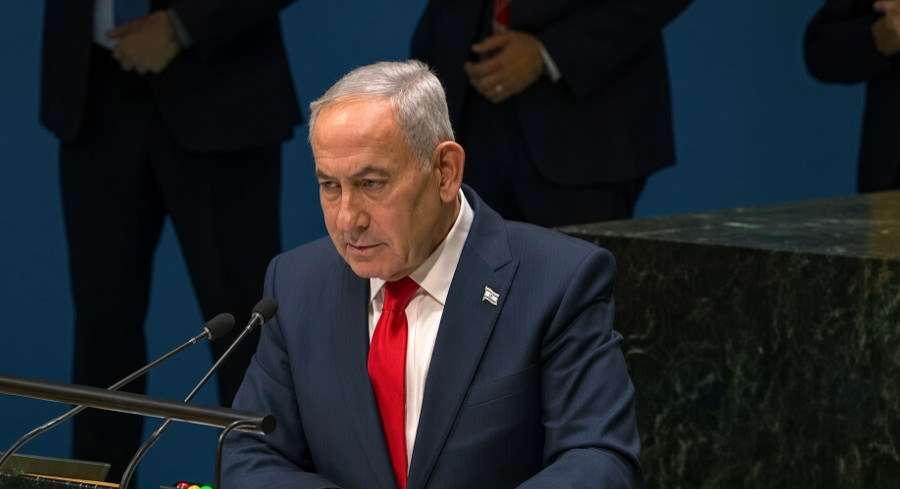
Carlson also pushed back against accusations of antisemitism leveled at him after he criticized billionaire investor Bill Ackman, Israeli Prime Minister Benjamin Netanyahu, U.S. actions in Gaza, and a potential war with Iran. “I think antisemitism is immoral, like all forms of discrimination on the basis of birth,” Carlson said. “But I also reserve the right to have any opinion I want. And that’s not the government’s business, what my attitudes are. It’s none of your freaking business. I’m a sovereign man. I’m an adult man and a taxpayer. I can have any opinion I want. That is constitutionally guaranteed. I don’t pay you to lecture me about my opinions. Your job is not to change my attitudes.”
Recounting how critics responded when he objected to military escalation with Iran and strikes affecting churches in Gaza, Carlson said his concerns were dismissed rather than debated. “I just don’t want an Iran war. And I want you to stop blowing up churches in Gaza because I’m a Christian and I have a right to thank them. So that’s my position. And they’re like, they don’t want to hear it. Shut up antisemite. I was like, but I’m not. And if I was, I’d just say so,” he said. He also alleged that donor Miriam Adelson spent $400 million to influence the Justice Department against critics of Netanyahu, and argued that the administration’s rhetoric was frightening his own Jewish friends by making them fear domestic hostility.
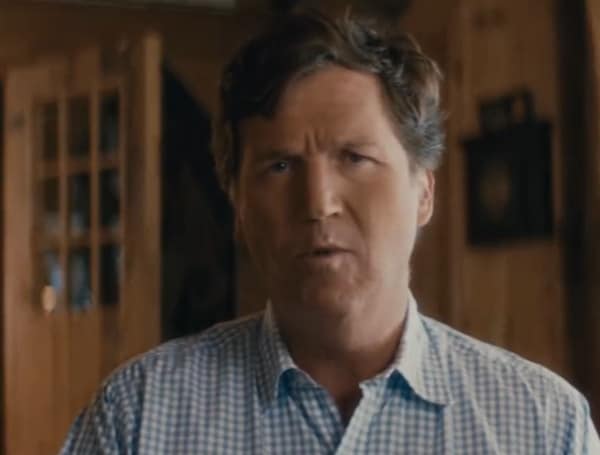
Carlson said he eventually made a deliberate decision to speak out despite knowing the personal and professional fallout. “And so I made a calculated decision. I was like, well, I don’t want to be called a Nazi. I’m very anti Nazi on every level, but I’m going to be called a Nazi. And can I handle it? Is it worth it? And I was like, well, if not now, when, you know, I’m 56. My kids are grown. I don’t have any debt. I’m not rich, but like I have enough. And if I can’t handle the pressure, then no one can. And I was like, I got to do this,” he said.
That decision, Carlson noted, severed close ties and ended his longtime role as a regular keynote speaker for Turning Point USA. “And it just blew up everything. It just blew up all these friendships of mine. I’m not whining. I’m just noting it. It’s just, it blew up Turning Point, completely destroyed Turning Point, which I loved. I was the keynote speaker year after year. Won’t have me now,” Carlson said. Looking at the broader conservative movement, he argued that advocates of a globalized economy had undermined any serious nationalist coalition—even claiming figures such as Nick Fuentes were used to discredit movement leaders—and concluded that Trump had been steered away from a national-sovereignty agenda without open debate.
Add The Tampa Free Press As A Preferred Source On Google
Please make a small donation to the Tampa Free Press to help sustain independent journalism. Your contribution enables us to continue delivering high-quality, local, and national news coverage.
