
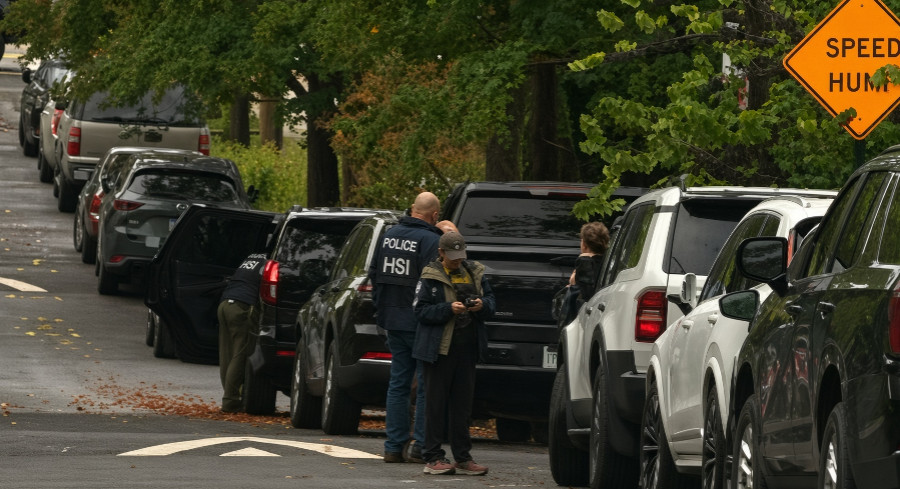
Federal court filings unsealed on Monday in Washington, D.C., shed new light on the Oct. 12 search of Rep. Ilhan Omar’s private residence, detailing an intense constitutional dispute between prosecutors and a federal magistrate judge over whether agents could search a sitting lawmaker’s home without special protections.
Chief U.S. District Judge James E. Boasberg ordered redacted portions of the docket and investigative records released following petitions from The New York Times and 14 other news organizations. Those media outlets argued in October filings that the public interest and significance of a search warrant executed at a congresswoman’s home outweighed the need for secrecy. The release moved forward despite a Monday request from U.S. Attorney Jeanine Ferris Pirro to extend the sealing deadline.
Last week, Boasberg directed prosecutors to submit redacted versions of the docket sheet and related filings by Friday, though he excluded the underlying search warrant affidavit from the release. News organizations now have until Nov. 30 to respond to the government’s proposed redactions.
According to the newly public records in case number 26-sw-318, prosecutors applied for the warrant on Oct. 2, seeking documents, physical records, cellphones, and digital storage devices tied to alleged offenses spanning from 1980 to the present. The filings identify the subject as “Ilhan Nur Said Elmi a/k/a Ilhan Abdullahi Omar” and note that prosecutors believe the alleged violations began “long before she was ever in Congress.” Specific statutory charges and probable cause details remain blacked out, though the investigation reportedly involves her immigration paperwork.

Before approving the warrant, U.S. Magistrate Judge Matthew J. Sharbaugh delayed signing off to examine whether searching a sitting member of Congress’s home implicated the Constitution’s Speech or Debate Clause. Under D.C. Circuit precedent, federal agents generally cannot conduct an initial review of legislative records without first giving a lawmaker the chance to assert privilege.
Prosecutors initially pushed back in an Oct. 7 brief, arguing the probe focused strictly on Omar’s private conduct and had no connection to her legislative work. Because her house is less than five miles from Capitol Hill, government attorneys contended there was no reason to assume she kept protected legislative paperwork at home, warning that expanding those rules would turn lawmakers into “super-citizens, immune from criminal responsibility” and make private residences “a sanctuary for crime.”
Judge Sharbaugh rejected that argument in a written order, pointing out that modern professionals routinely bring laptops, committee binders, briefing books, and draft floor speeches home. “That perspective blinks reality,” Sharbaugh wrote, ruling that the warrant required special search protocols—included as Attachment C—so Omar could flag any privileged legislative materials at the outset before agents reviewed them.
Sharbaugh signed the warrant on Oct. 9, authorizing a daytime search between 6:00 a.m. and 10:00 p.m. Before executing it, the Justice Department notified the U.S. House of Representatives General Counsel, who declined to participate and told prosecutors that, in his view, Speech or Debate protections did not extend to a member’s private residence.

At roughly 6:05 a.m. on Oct. 12, Homeland Security Investigations agents executed the search warrant at Omar’s Washington home.
Omar, a Minnesota Democrat, has not been charged and has denied any wrongdoing, calling the search politically motivated. She previously said as many as 25 agents spent four to five hours inside her home and took 17 items she called “bizarre,” including several phones, notebooks belonging to her husband, a camera, and a Somali-language children’s book.
“I don’t think anybody still has an understanding of what is happening. I mean, it doesn’t make any sense that they would raid a house to take my phone …” Omar said in an Oct. 21 interview with MS Now. “So to come that early to take my phone just sounded obnoxious. It still sounds obnoxious.”
Days after the raid, Judge Sharbaugh signaled he intended to immediately unseal his written order explaining the constitutional ruling, prompting an emergency objection from prosecutors. The U.S. Attorney’s Office argued that releasing the judge’s order while the underlying affidavits remained secret would create a one-sided narrative and compromise an active, pre-indictment investigation. In a Nov. 4 status report, government attorneys added that execution of the search warrant remained incomplete and urged the court to keep the entire docket closed until a charging decision was made public.
Following the consolidated legal challenges from the 15 media outlets, Chief Judge Boasberg rejected the government’s push to keep the entire case hidden, ordering the redacted files released on Monday.
Document-by-Document Breakdown
1. PACER Criminal Docket Sheet (Filed Oct. 2 – Nov. 4, 2026)
- Lists no pending or terminated counts and no criminal complaints, reflecting a pre-indictment search warrant docket.
- Tracks the procedural history from the initial Oct. 2 warrant application through the Oct. 9 warrant issuance, the Oct. 12 raid, and subsequent sealing disputes.
2. Document 1: Government’s Supplemental Ex Parte Brief (Filed Oct. 7, 2026 — 11 pages)
- Filed after Judge Sharbaugh paused the Oct. 2 warrant application to ask whether searching a sitting member of Congress’s private home implicated the Constitution’s Speech or Debate Clause under United States v. Rayburn House Office Building (2007).
- Main Argument: Prosecutors argued the Speech or Debate Clause did not apply because the investigation targeted Omar’s strictly private conduct rather than her legislative work. They contended it was not “inevitable” that agents would find legislative records at her house—located less than five miles from her Capitol Hill office—because modern work is mostly digital and she had over a dozen staffers to handle paperwork.
- Warning Against Immunity: Prosecutors argued that extending Rayburn protections to a lawmaker’s private residence would turn members of Congress into “‘super-citizens, immune from criminal responsibility'” and turn private residences into “‘a sanctuary for crime.'”
- Alternative Proposals: Prosecutors offered two alternative special search protocols (attached as Exhibits 2 and 4, which are redacted) involving a filter team or Special Master to house seized items while Omar asserted any privilege claims.
3. Document 2: Magistrate Judge’s Interim Order (Filed Oct. 7, 2026 — 2 pages)
- Judge Sharbaugh ordered prosecutors to file another brief by 8:00 p.m. that same day to more fully explain their legal theories of probable cause for certain redacted offenses.
- Directed prosecutors to assume Rayburn applied to a lawmaker’s residence and propose a search protocol that went beyond the filter-team model rejected in Rayburn.
4. Document 3: Government’s Second Supplemental Ex Parte Brief (Filed Oct. 7, 2026 — 10 pages)
- Prosecutors defended probable cause across all target offenses under a totality-of-the-circumstances standard, citing recent D.C. Circuit precedent (United States v. Thorne, 2026).
- Reasserted that no extra protocols were legally required for a private home, while pointing back to their two alternative protocols designed to hold seized materials in a sterile environment before any executive branch review.
5. Documents 4 & 6: Search Warrant Application, Warrant, and Attachments (Filed Oct. 9, 2026 — 78 pages total, heavily redacted)
- The Warrant: Signed by Judge Sharbaugh on Oct. 9, 2026, authorizing daytime execution (6:00 a.m. to 10:00 p.m.) on or before Oct. 23, 2026. The underlying probable cause affidavit is completely withheld/redacted.
- Attachment A (Property to Be Searched): Covers the redacted Washington, D.C., residence along with covered areas, temporary structures, and outbuildings within the property’s curtilage.
- Attachment B (Property to Be Seized): Authorizes seizure of physical papers, records, photographs, and documents tied to the redacted offenses; thumb drives, external hard drives, computers, and electronic storage media; cellphones registered to or used by Omar; and any other digital devices owned, used, or controlled by her or found near evidence.
- Attachment C (Special Speech or Debate Clause Search Procedures): A 4-page attachment (with pages 2–4 redacted) establishing special procedures so Omar could assert Speech or Debate privilege over legislative materials before executive branch agents reviewed them.
6. Documents 5, 5-1 & 7: Application and Order to Seal (Filed Oct. 9, 2026)
- Prosecutors moved to seal the entire case, arguing that public disclosure of an active, non-public criminal investigation could prompt targets to flee, destroy evidence, or intimidate witnesses. Judge Sharbaugh granted the sealing order on Oct. 9.
7. Document 8: Search Warrant Return (Filed Oct. 13, 2026)
- Confirms the warrant was executed on Oct. 12, 2026. The handwritten inventory of seized property and the name of the person who received a copy of the warrant are largely illegible or redacted.
8. Document 9 & Docket Entry 10: Memorandum Order and Minute Order (Filed Oct. 15, 2026 — 7 pages)
- Constitutional Ruling: Judge Sharbaugh explained his Oct. 8 oral ruling, rejecting prosecutors’ claim that members of Congress do not bring legislative work home. “That perspective blinks reality,” he wrote, noting that in 2026 lawmakers routinely bring home laptops, briefing books, committee binders, and draft floor speeches. He held that Rayburn applied and required giving Omar a chance to flag privileged legislative records at the outset of the search.
- Unsealing Notice: In an accompanying Minute Order, Sharbaugh stated he intended to promptly unseal his Memorandum Order and gave prosecutors until noon on Oct. 16 to propose redactions.
9. Document 12 & Docket Entry 13: Government’s Emergency Brief Opposing Unsealing & Stay Order (Filed Oct. 16–17, 2026 — 16 pages)
- Raid Details Revealed: Discloses that prior to the raid, the Justice Department notified the U.S. House General Counsel, who declined to participate and stated that Speech or Debate protections did not extend to a member’s private home. Confirms HSI agents executed the warrant at approximately 6:05 a.m. on Oct. 12, 2026, following Attachment C protocols.
- Objections to Unsealing: Prosecutors argued that unsealing the judge’s order during a pre-indictment investigation violated legal precedent and was unfair because the underlying affidavits remained sealed. They accused Sharbaugh of factual inaccuracies, including omitting the House General Counsel’s position and falsely stating prosecutors refused to engage on search protocols.
- Stay Granted: On Oct. 17, Sharbaugh deferred unsealing after noting that The New York Times (
26-mc-145) and 14 other news organizations (26-mc-144) had filed motions to unseal the records before Chief Judge Boasberg.
10. Document 16: Government’s Status Report on Continued Sealing (Filed Nov. 4, 2026 — 4 pages)
- Notes that The New York Times and press outlets filed unsealing motions on Oct. 14 (
26-mc-144,26-mc-145, and26-mc-147) and that final briefing concluded on Oct. 30 before Chief Judge Boasberg. - Urged the court to keep the entire docket sealed because the criminal investigation remained active and execution of the search warrant was still incomplete.
